
Wedding photography lighting affects more than whether a photograph looks bright. It shapes faces, separates people from their surroundings and helps preserve the atmosphere of a ceremony. Professional control means knowing when the available light is enough, when to change position and when extra light would help. For an Indore wedding, the useful question is not how much equipment arrives, but how the team adapts as the celebration moves between spaces.
Light direction gives faces shape
A light directly above someone can leave deep shadows around their eyes. Light from the side can reveal texture and shape, while a broad source near the camera can soften those shadows. Neither look is automatically right. During portraits, a photographer can adjust the couple’s position; during a ritual, the camera position may be the only practical choice. This attention to direction matters even when no flash is used. Our guide to outdoor wedding photography considers how the setting affects those decisions.
Softness changes the feeling of a frame
Soft light creates gradual transitions between light and shadow. A shaded doorway or a large window may provide it naturally. A small, direct source produces harder edges, which can suit an energetic dance floor but look severe in a quiet close portrait. Professional control involves choosing the character of light for the moment rather than applying one formula. Indoors, walls and ceilings can sometimes help spread flash, although their colour and height affect the result. See our indoor wedding photography guide for related planning considerations.
Colour needs attention across the venue
A reception can combine warm lamps, daylight from a doorway and coloured stage lights. These sources may cast different colours across the same face. Editing can adjust a photograph’s overall colour balance, but it cannot always remove conflicting casts cleanly. A photographer may change the angle, place people away from a coloured wash or add a controlled source. Discuss the stage lighting with both teams before the event, particularly if strong colours will point directly at the couple throughout a ceremony.
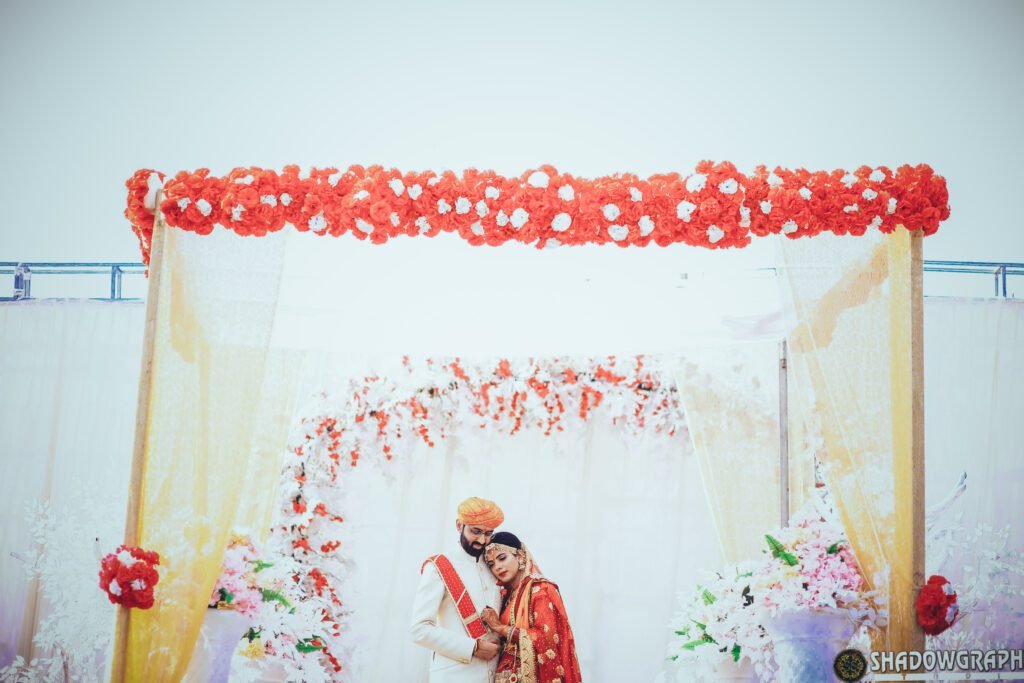
Extra light should preserve the atmosphere
Adding flash does not have to mean turning an evening scene into daylight. Exposure choices can keep lamps and venue details visible while making expressions clearer. Too much added light can flatten the scene; too little can leave important faces difficult to read. The balance depends on movement, distance and the existing illumination. Our article on night wedding photography explores the wider challenges of working after dark. A silhouette is a deliberate exception: the outline, rather than facial detail, carries the picture.
Creative portraits are a separate decision
Reliable ceremony lighting and dramatic portrait lighting serve different purposes. Ritual coverage needs readable expressions without interrupting proceedings. A planned portrait can use deeper shadows, backlighting or a more stylised treatment. Agree which approach you want rather than assuming that dramatic sample images describe every photograph in a gallery. Explore creative wedding portrait lighting for that specific style, or silhouette photographs if you prefer a graphic outline against the background.
Ask to see complete lighting conditions
Review photographs from bright outdoor ceremonies, dim rooms and evening celebrations, not only selected portraits. Look for natural skin colour, visible expressions and backgrounds that retain their mood. Ask about venue restrictions, safe equipment positions and how the team works around guests. A complete gallery also shows whether lighting stays consistent as people move, rather than only when they stand in a carefully prepared spot. If you are planning wedding photography lighting for your celebration, use the contact page to share your venue, ceremony spaces and the atmosphere you want preserved.