
An Indian wedding day moves through many indoor settings: the getting-ready rooms, the banquet hall, the mandap under a ceiling of fairy lights. Indoor light is where good wedding photos are won or lost, because the camera handles a dim hall very differently from the human eye. Knowing what changes indoors helps you plan a wedding that photographs beautifully, whatever the venue’s lighting is like.
This guide explains what actually matters, whether your functions are in a hotel ballroom, a marriage garden hall or your own home.
Why hall light is harder than it looks
Your eyes adjust to a dim room in seconds; a camera cannot cheat the same way. Banquet halls typically mix three or four kinds of light at once: warm tungsten spots, cool LED panels, coloured decorative lights and whatever daylight leaks in from windows or doors. Each source throws a different colour onto skin, and the mix changes as you move across the room. Add a dark ceiling that swallows bounce light, and you get the classic indoor problems: muddy skin tones, coloured shadows and grainy backgrounds.
None of this means indoor photos have to look flat. It means the light has to be understood and worked with, not fought.
Walk the venue with photos in mind
If you can, visit your venue at the same time of day as your function. Notice where natural light enters, because windows and glass doors are the most flattering light sources in any hall. Look at the stage or mandap: is it lit from the front, the top, or only by decorative lights from behind? Check for strong coloured LEDs aimed at the couple’s seats, since magenta or deep blue light on faces is difficult to correct later. A five-minute walk with your photographer, or even a few phone photos shared with them in advance, gives them a real plan for your hall. Our guide on questions to ask your wedding photographer covers the venue conversation in more detail.
Getting-ready photos belong by the window
The single easiest indoor upgrade costs nothing: do your makeup and dressing near the largest window in the room. Soft daylight from the side models faces gently, keeps skin tones natural and gives details like jewellery and lehenga work a clean, crisp look. Rooms deep inside a suite, lit only by ceiling bulbs, tend to produce flat, yellow-tinged photos no matter how skilled the photographer. When you plan the morning, reserve the brightest room for the person getting ready, and our bridal getting-ready photos guide shows how much difference the room choice makes.
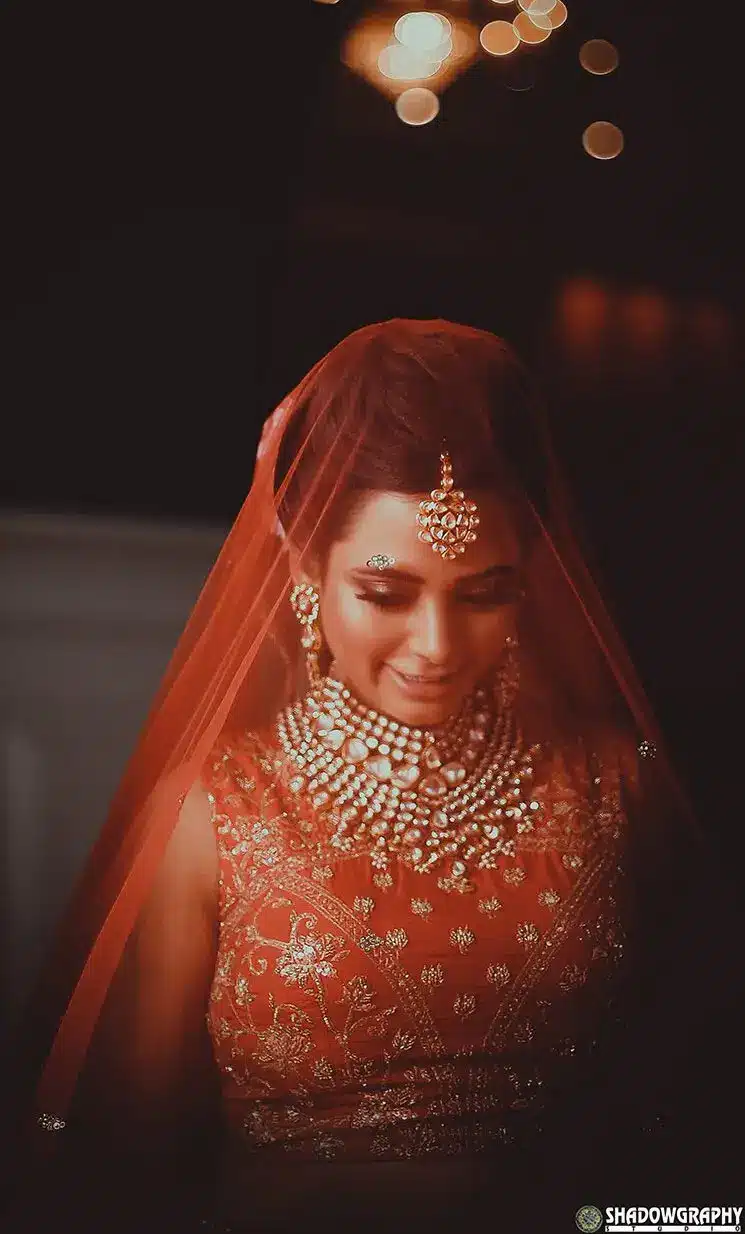
The mandap and stage need their own plan
Indoor ceremonies usually happen under a fixed lighting setup the decorator controls. A short conversation between your photographer and decorator before the function solves most problems: front-facing white or warm light on the couple, coloured lights kept on the backdrop rather than the faces, and bright flicker-heavy LEDs dimmed during key rituals. Photographers handle dim mandaps with fast lenses and off-camera flash, but a well-lit stage gives them far more to work with, especially during quick moments like the sindoor or the ring exchange. Receptions have the same story on a bigger stage, as our reception photography guide explains.
Couple portraits indoors are a chance, not a compromise
Corridors with a line of ceiling lights, a staircase window, a textured wall in the lobby: indoor venues are full of portrait corners that look nothing like an outdoor shoot, in a good way. Ten quiet minutes away from the crowd with your photographer usually yields a small set of dramatic, intimate frames. Ask for this pocket of time in your schedule. If your celebrations run into the evening, our night wedding photography guide covers what changes once the light outside is gone.
What this means for your photographer choice
Indoor coverage is where experience shows most clearly in a portfolio. When you review a photographer’s past work, look specifically at full indoor sets: ceremony, stage and dance floor, not just outdoor couple portraits. Consistent skin tones, clean whites and sharp moments in dim halls are the markers to watch for. Our roundup of the best wedding photographers in Indore is a good place to compare portfolios side by side.
At Shadowgraphy Studio, we plan indoor coverage around your venue’s actual light, from the getting-ready room to the last dance. If your wedding is coming up in or around Indore, tell us your date and venue and we will walk you through how we would shoot it.