
Wedding photography lighting affects more than whether a photograph looks bright. It shapes faces, separates people from their surroundings and helps preserve the atmosphere of a ceremony. Professional control means knowing when the available light is enough, when to change position and when extra light would help. For an Indore wedding, the useful question is not how much equipment arrives, but how the team adapts as the celebration moves between spaces.
Light direction gives faces shape
A light directly above someone can leave deep shadows around their eyes. Light from the side can reveal texture and shape, while a broad source near the camera can soften those shadows. Neither look is automatically right. During portraits, a photographer can adjust the couple’s position; during a ritual, the camera position may be the only practical choice. This attention to direction matters even when no flash is used. Our guide to outdoor wedding photography considers how the setting affects those decisions.
Softness changes the feeling of a frame
Soft light creates gradual transitions between light and shadow. A shaded doorway or a large window may provide it naturally. A small, direct source produces harder edges, which can suit an energetic dance floor but look severe in a quiet close portrait. Professional control involves choosing the character of light for the moment rather than applying one formula. Indoors, walls and ceilings can sometimes help spread flash, although their colour and height affect the result. See our indoor wedding photography guide for related planning considerations.
Colour needs attention across the venue
A reception can combine warm lamps, daylight from a doorway and coloured stage lights. These sources may cast different colours across the same face. Editing can adjust a photograph’s overall colour balance, but it cannot always remove conflicting casts cleanly. A photographer may change the angle, place people away from a coloured wash or add a controlled source. Discuss the stage lighting with both teams before the event, particularly if strong colours will point directly at the couple throughout a ceremony.
Extra light should preserve the atmosphere
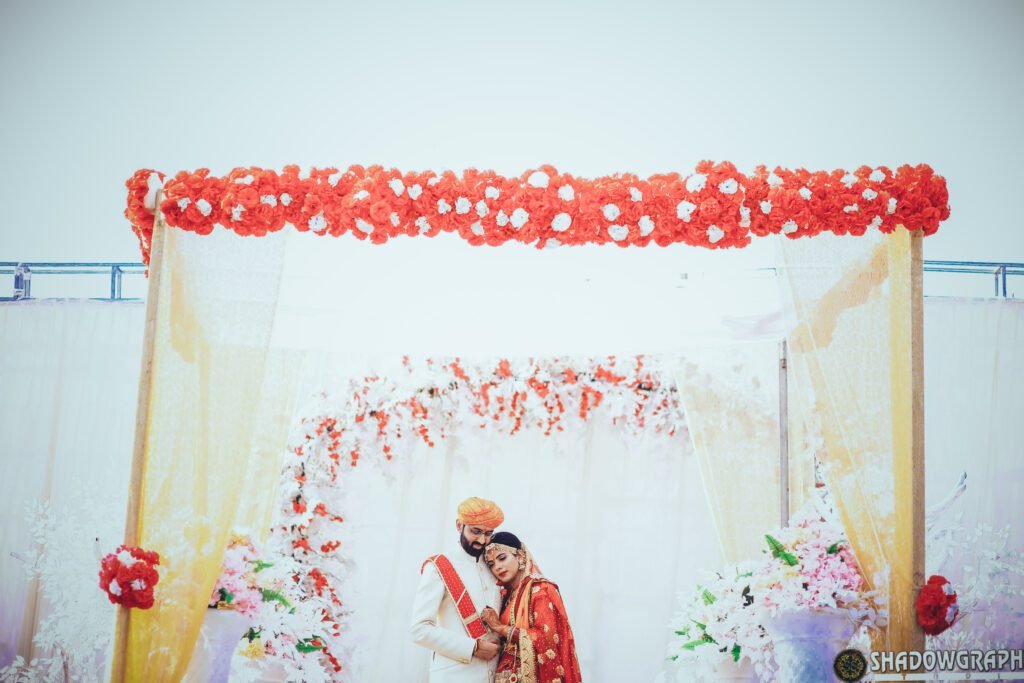
Adding flash does not have to mean turning an evening scene into daylight. Exposure choices can keep lamps and venue details visible while making expressions clearer. Too much added light can flatten the scene; too little can leave important faces difficult to read. The balance depends on movement, distance and the existing illumination. Our article on night wedding photography explores the wider challenges of working after dark. A silhouette is a deliberate exception: the outline, rather than facial detail, carries the picture.
Creative portraits are a separate decision
Reliable ceremony lighting and dramatic portrait lighting serve different purposes. Ritual coverage needs readable expressions without interrupting proceedings. A planned portrait can use deeper shadows, backlighting or a more stylised treatment. Agree which approach you want rather than assuming that dramatic sample images describe every photograph in a gallery. Explore creative wedding portrait lighting for that specific style, or silhouette photographs if you prefer a graphic outline against the background.
Creative lighting for couple portraits
Some wedding photographs document what happened, and some feel like they belong on a film poster. The difference is often a few minutes of deliberate, creative lighting. For couples who want a handful of dramatic portraits alongside their candid coverage, a short planned portrait slot can produce frames that stand apart from the rest of the gallery.
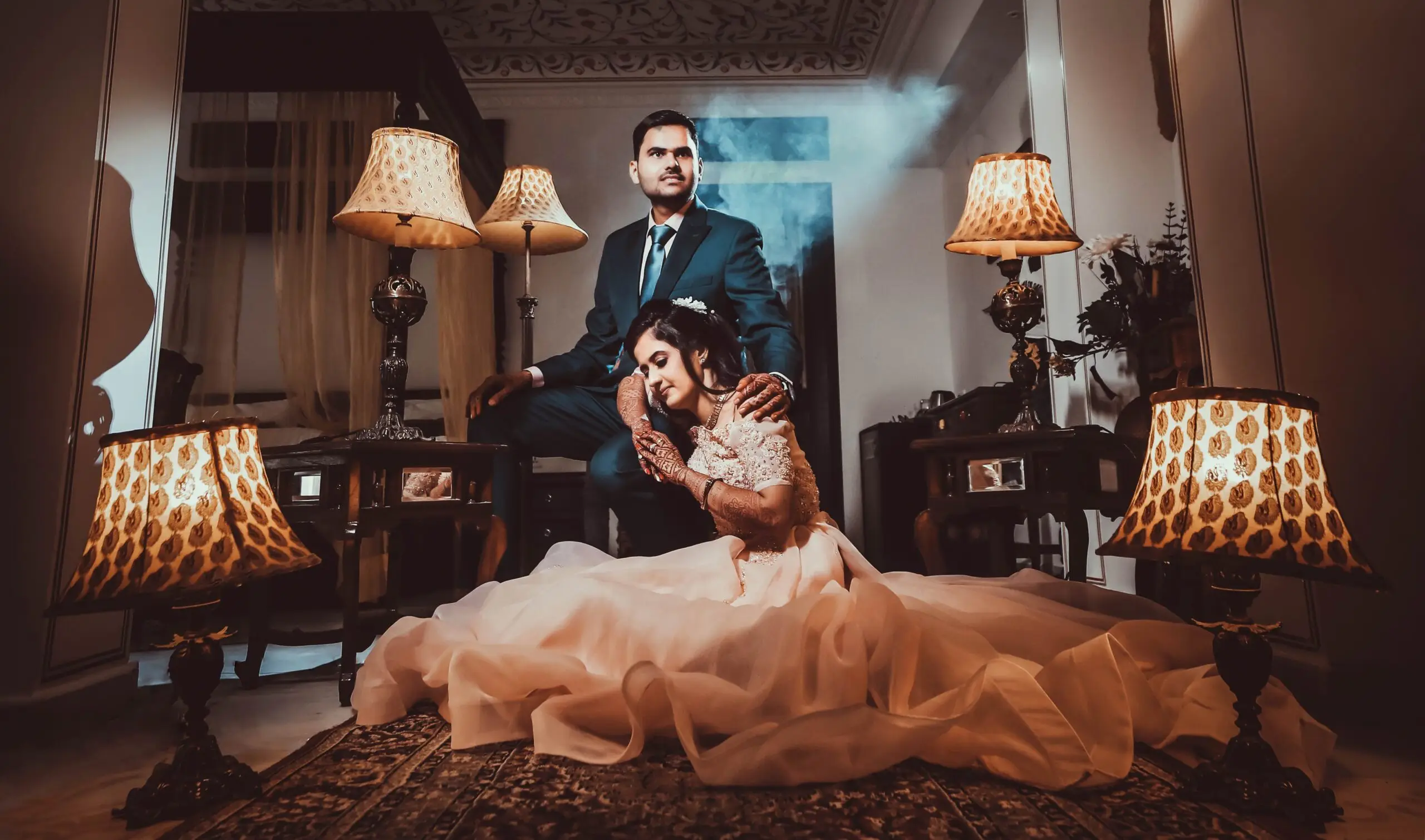
Drama in a portrait usually comes from contrast: a brightly lit couple against a dark background, a rim of coloured light tracing a silhouette, or a single warm lamp glowing in a quiet corner. These looks rarely happen by accident. They tend to come from a photographer placing light deliberately, then positioning the couple within it. Understanding this helps couples see why a photographer may ask for ten minutes away from the crowd.
Small flashes or LED panels fitted with coloured gels can wash a portrait in deep reds, blues or purples. Used with restraint, coloured light tends to flatter evening receptions and cocktail-style celebrations, where the ambient mood is already low and warm. A common approach pairs two contrasting colours, one on each side of the couple, so the frame feels three-dimensional and cinematic. Couples who enjoy bold styling may wish to mention this preference early, since gel setups are usually planned rather than improvised.
Ask to see complete lighting conditions
Review photographs from bright outdoor ceremonies, dim rooms and evening celebrations, not only selected portraits. Look for natural skin colour, visible expressions and backgrounds that retain their mood. Ask about venue restrictions, safe equipment positions and how the team works around guests. A complete gallery also shows whether lighting stays consistent as people move, rather than only when they stand in a carefully prepared spot.
Planning your shoot in Indore? Send us your date and venue on WhatsApp or call +91 97700 81043, and we will tell you if the date is free.