
Once a couple starts saving pre-wedding ideas, the location list tends to grow fast: a lake, an old fort, a cafe, a forest road, maybe all of them. At some point the practical question arrives: how many spots can one shoot actually hold? The answer depends less on rules and more on how the couple wants the day to feel. This guide walks through the trade-offs, so the number becomes an easy choice rather than a guess.
There is no correct count. There is only the count that fits the day, the outfits and the frames that matter most.
Why the Count Shapes the Whole Shoot
Every location added to a shoot brings two things: a new backdrop, and the time it takes to reach it. A day built around one place can go deep, while a day built around several places trades depth for variety. Neither is better in general. Couples who talk through what they want their gallery to feel like usually find the number settles itself, and our guide to choosing a pre-wedding location can help with the shortlist itself.
The Case for One Location
A single well-chosen spot can hold more variety than it first appears. A resort, a heritage property or a lakeside may offer architecture, gardens, water and quiet corners within a short walk, so the gallery gains range without anyone watching the clock. Staying put also keeps the mood relaxed: no packing up, no traffic, no arriving flustered. For couples who feel camera-shy, one familiar place often helps the frames loosen up faster.
The Case for Two or Three
Multiple locations earn their travel time when they are genuinely different in character. A natural spot and an architectural one, or a grand setting and a casual street, give a gallery two distinct moods, and each can pair with its own outfit. Our outfit guide covers that pairing in more detail. Beyond two or three stops, though, the returns usually thin out: each added place costs time that could have been spent actually shooting.
What Travel Time Really Costs
Moving between spots involves more than the drive. There is gathering things, reaching the new place, finding the light again and settling back in front of the camera. A gap that looks like twenty minutes on a map can quietly absorb much more of the session. Light matters here too, since the softest hours are short; our timing guide explains how photographers plan around them. Locations that sit close together protect those hours far better than a longer chain of distant stops.
Matching Locations to Outfits and Mood
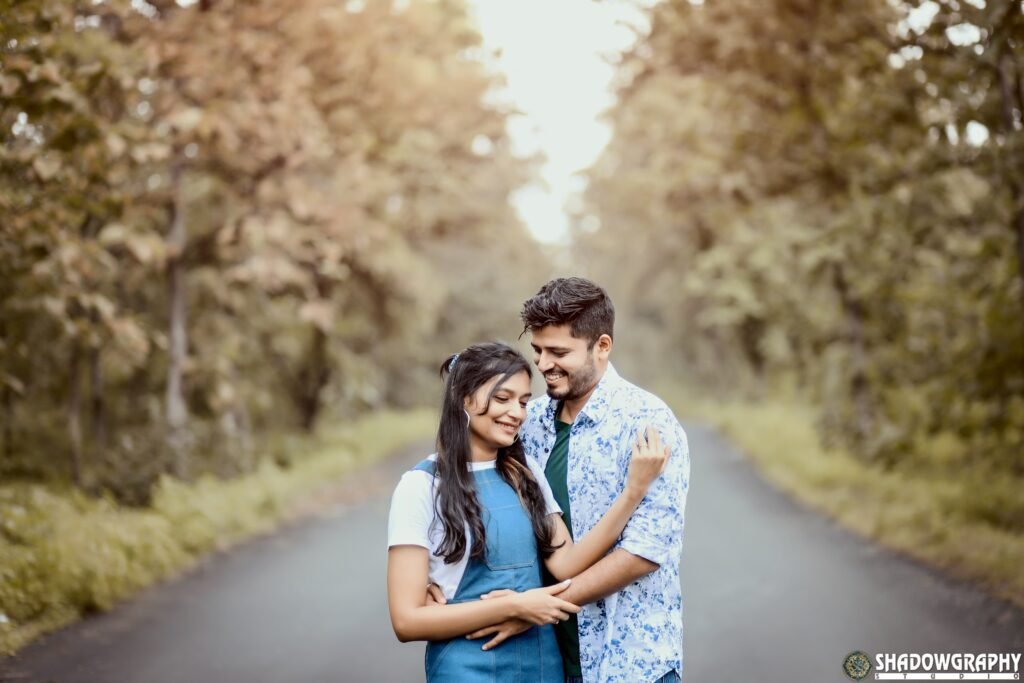
A useful way to think about the count is to start from looks rather than places. Each outfit change suggests its own backdrop, so two outfits often point toward two complementary spots, while one outfit fits one location naturally. A mood board makes this visible before the day: when the saved frames cluster around one kind of setting, one location may be enough, and when they span several styles, a second spot starts to make sense.
A Simple Way to Decide
A few questions tend to settle it. How different are the saved ideas from each other? How much of the day feels comfortable to spend in transit? Do the favourite spots sit near each other, and do any of them need permissions or have fixed hours? It also helps to think about the season and the hour the shoot is planned for, since some spots shine only at certain times. Answering these honestly usually lands couples on one, two or three locations, and a photographer who knows the area can say how those choices have tended to work in practice.
In the end, the best location count is the one that leaves the couple unhurried. Couples weighing spots for their own shoot are welcome to get in touch with us; we are glad to talk through what could work for their day.