
Wedding reception photography works best when the evening has a little breathing room. Between an entrance, stage greetings, family groups and dinner, a couple can spend hours smiling without getting a single quiet portrait together. A simple plan helps the photography team record the celebration without turning every moment into another instruction.
This guide is for Indore couples planning reception coverage. Use it as a conversation starter with your photographer and event coordinator, not a rigid schedule. Your venue layout, guest count, customs and comfort should decide the final plan.
Start with the story you want to remember
A reception is more than a decorated stage. Think about the people travelling to celebrate with you, a parent’s expression during your entrance, friends meeting after years apart and the small conversations around the dinner tables. Tell your photographer which of these matter most.
Choose a few priorities rather than requesting every possible photograph. For example, you might want one clean stage portrait with each immediate family, a short couple session and plenty of candid guest interaction. Another couple may prefer speeches, dancing and the room’s atmosphere. Neither approach is automatically better.
Make a reception photography plan before guests arrive
Share the actual sequence of the evening with the team. Include your expected arrival, entrance, any speeches or performances, stage greetings and dinner. If something has no fixed time, mark it as flexible instead of inventing a minute-by-minute promise.
- Who will tell the photographer when the couple is ready to enter?
- Will guests start greeting you immediately or after a short welcome?
- Are there elderly relatives who should be photographed early?
- Is there a quiet space for portraits away from the queue?
- Which events must the photo and video teams cover at the same time?
Build these answers into your wedding photography timeline. Leave room for delays, outfit adjustments and a drink of water. A plan that depends on everything running perfectly is difficult to follow on a wedding day.
Photograph the room before it fills up
If decor photographs matter to you, arrange access before guests are seated. A clear view of the stage, tables, entrance and meaningful details is easier before bags, service trays and people fill the room. Confirm when the decor and lighting will actually be ready.
Tell the team about personal details that may be easy to miss: a family photograph at the entrance, handwritten notes, a special cake or flowers chosen for a reason. Do not assume a photographer can identify their significance by looking at them.
Give the entrance a clear route
Discuss where you will enter and where you will pause. A small pause can help the team make a clean photograph before you move into a crowd. Ask the coordinator to avoid placing staff, cables or equipment in the route.
Let your team know about confetti, cold sparks, smoke or other effects in advance. The venue and qualified operator should decide safety arrangements. Do not repeat an unsafe effect or block an exit for a photograph. A genuine entrance is worth more than a risky recreation.
Keep stage portraits organised, not rushed
A long greeting queue can make stage photographs feel repetitive. Nominate a family helper who recognises relatives and can call the next group. Your photographer should not have to guess who belongs together.
Keep groups manageable and allow a moment for everyone to face the camera. A photographer may make an extra frame to reduce the chance of closed eyes, but no team can guarantee every expression in a crowded group. Ask guests to avoid taking competing photographs directly beside the main camera if it splits everyone’s attention.
Use a short family wedding photo checklist for essential combinations. Photograph guests who need to leave early or cannot stand for long first. Offer chairs where useful and let comfort take priority over symmetry.
Protect a short window for couple portraits
Agree on a small portrait window before the greeting queue begins, during a natural break or after the formal programme. Even a short session is easier when your coordinator knows you are stepping away. Do not disappear without telling the people managing the stage.
Choose a nearby background instead of travelling across a large property. A doorway, a quiet corridor or a corner with suitable light may be enough. The aim is a few photographs that feel like you, not a second full shoot when you are tired.
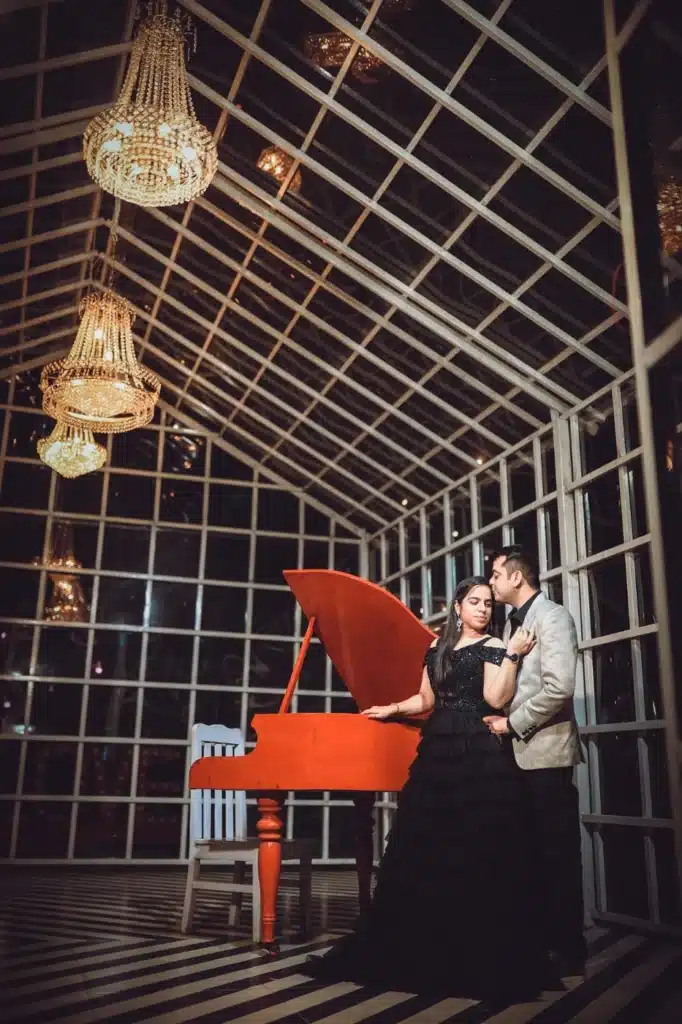
Talk about lighting before the evening begins
Reception rooms can mix warm ceiling lights, coloured stage lights and moving effects. Share the lighting plan with the photography and video teams before the event. Let them speak with the coordinator about practical adjustments rather than asking you to solve technical issues while greeting guests.
A soft, steady light on faces often makes portraits easier than rapidly changing colours. However, the final approach depends on the room and the look you want. Ask whether additional light is needed and where it can stand without obstructing guests. Do not assume every venue allows the same equipment.
Leave space for candid guest photographs
If every photographer is tied to the stage all evening, fewer guest interactions may be recorded elsewhere. Discuss how coverage will be divided. With simultaneous speeches, greetings and dancing, your priorities and photography team size should match the actual programme.
Tell the team about important guests, but avoid expecting a candid portrait of every person in a large crowd. A planned group photograph is a more dependable way to include someone essential. Respect anyone who does not want close-up photographs, especially children whose parents have expressed a preference.
Confirm what happens at the end of coverage
Check the agreed finish time before the event. If dinner or a performance runs late, ask who can approve extra coverage and what the terms are. Do not assume the team can stay indefinitely or that an extension is included.
Before the team leaves, a designated person can check whether the essential family groups and planned events are complete. This is a practical check, not a request to review every frame on the camera during the party.
A short reception photography checklist
- Share the programme, venue access and a coordinator’s contact.
- Identify the entrance route and any special effects.
- Allow access for decor photographs when the room is ready.
- Choose essential family groups and a helper who knows them.
- Protect a short couple portrait window.
- Discuss stage light and simultaneous coverage needs.
- Confirm the finish time and how changes will be approved.
Wedding reception photography FAQs
Should couple portraits happen before or after the reception?
Choose the point when you are dressed, comfortable and not keeping guests waiting unexpectedly. Before the entrance can work if preparations finish in time. A later break can work if your coordinator protects it. Keep a backup window rather than relying on one exact moment.
Do we need a photograph with every guest?
That is your choice, but discuss the guest count and time available. Essential group photographs plus candid coverage can be more manageable than promising individual photographs with everyone. Tell your team clearly if comprehensive stage groups are the priority.
What should we send our photographer in advance?
Send the programme, venue details, important people, essential photographs and any privacy preferences. Add these to your photography brief. For a reception in Indore, contact Shadowgraphy Studio through the website with your date, venue and coverage needs to discuss a plan suited to your evening.