
Editorial wedding photography brings the care of a magazine portrait to a wedding day. Light, clothing, posture and background are considered together rather than left entirely to chance. That does not mean turning every ritual into a fashion shoot. For Indore couples, the useful question is where a little direction will improve the photographs without taking over the celebration. This guide explains the approach and how to plan for it.
What editorial wedding photography means
An editorial portrait is made with intention. A photographer might choose a quiet doorway, turn a shoulder towards the light, straighten a jacket or arrange a dupatta so its shape reads clearly. The aim is a composed photograph with a clear point of attention. It can look relaxed, dramatic or restrained. Editorial describes the decisions behind the frame, not a compulsory expression, expensive outfit or particular colour filter.
How it differs from documentary coverage
The distinction is direction. In documentary wedding photography, the photographer responds to events without asking people to repeat them. During an editorial portrait, there is permission to adjust the scene. Both can belong in one gallery. Keep the ceremony and family reactions uninterrupted, then reserve a separate portrait window. An exchange of glances during a ritual should not be recreated merely because another camera angle would look cleaner.
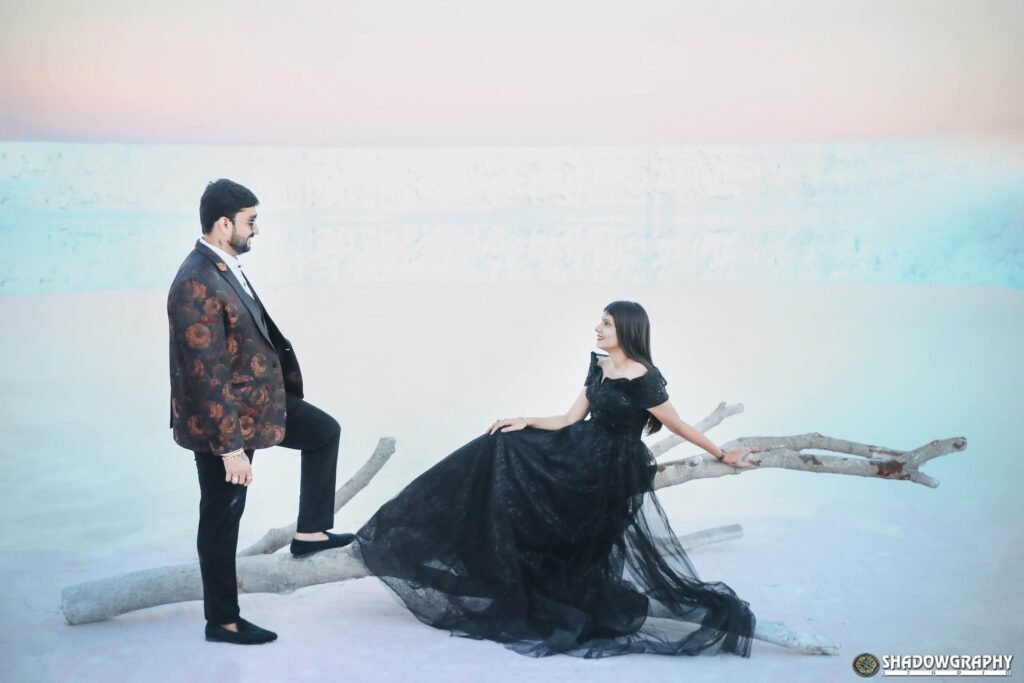
Build the portrait around the setting
Start with a usable space rather than a complicated pose. A shaded corridor, plain wall or uncluttered room can provide a stronger setting than an elaborate corner full of bags and cables. Look at where light reaches faces and whether the outfit separates from the background. Keep walking routes clear. For a wedding venue, ask which spaces will actually be accessible while guests arrive, rather than planning around a photograph taken when the building was empty.
Allow direction without losing yourselves
Useful direction is specific and comfortable: soften a hand, shift weight, bring faces closer, then pause. Tell the photographer if a pose strains your neck, restricts breathing or feels unlike you. Clothes should fall naturally rather than be pulled into a shape they cannot hold. Ideas from bridal portrait planning and wedding couple portraits can help you describe the balance you want. Choose references for their mood, not as instructions to copy another couple exactly.
Protect time for portraits and people
Discuss the portrait window before fixing the final programme. Include getting to the chosen space, checking clothes and returning to the celebration, not only camera time. The wedding day photography timeline guide can help structure that conversation. Agree on a simpler indoor alternative if access, rain or a delayed ceremony changes the plan. A shorter, calm portrait session is preferable to rushing family photographs or asking guests to wait without an explanation.
Judge a complete gallery before booking
Ask to see how directed portraits sit beside ceremony photographs, family groups and evening coverage. Look for believable skin tones, clear faces and clothes that retain their texture. Discuss retouching boundaries instead of assuming editorial means changing bodies or removing every sign of expression. The wedding photography editing styles guide explains why the finish deserves its own discussion. Ask what can be planned and what must remain flexible on the day.
Bring a small set of references to the discussion and explain what you like about each. A clear preference for clean backgrounds or expressive movement is more useful than asking for a fashionable label alone.
Choose editorial wedding photography if considered portraits appeal to you, while keeping space for the people and rituals that make the wedding yours. For a celebration in Indore, use the contact page to discuss your priorities and the kind of direction you feel comfortable receiving.