
Couple portraits get a lot of attention, and rightly so, but the solo frames of the bride often become the most treasured images of the day. A few unhurried minutes with the right pose, light and detail can produce a portrait that ends up framed for years. This guide shares bridal portrait poses that tend to work beautifully, along with practical tips for timing and light.
Why Solo Bridal Portraits Deserve Time
Months go into choosing the lehenga, the jewellery and the makeup, and the wedding morning is often the only quiet window to honour all of it. Solo portraits let the bride settle into the camera before the ceremonies begin, and they give the photographer room to work slowly on details. Couples who plan even fifteen minutes for these frames usually find it pays off in the album.
Classic Poses That Tend to Work
Some poses have lasted because they flatter almost everyone. A gentle downward glance shows off the matha patti, the eyeshadow and the neckline all at once. An over-the-shoulder look back adds softness and movement. Hands matter more than people expect: adjusting a bangle, holding the dupatta or touching an earring gives the frame a natural anchor. The common thread is ease; stiff arms and forced smiles are what make portraits feel posed.
Let the Details Lead
Bridal details can carry a portrait on their own. A close frame on the chuda being adjusted, the nose ring being set or the dupatta falling over the shoulder tells the story of the morning without showing everything at once. Our guide to wedding detail photos covers how these smaller frames round out a gallery. Ask your photographer to alternate between wide portraits and tight detail shots in the same window of time.
Getting the Light Right
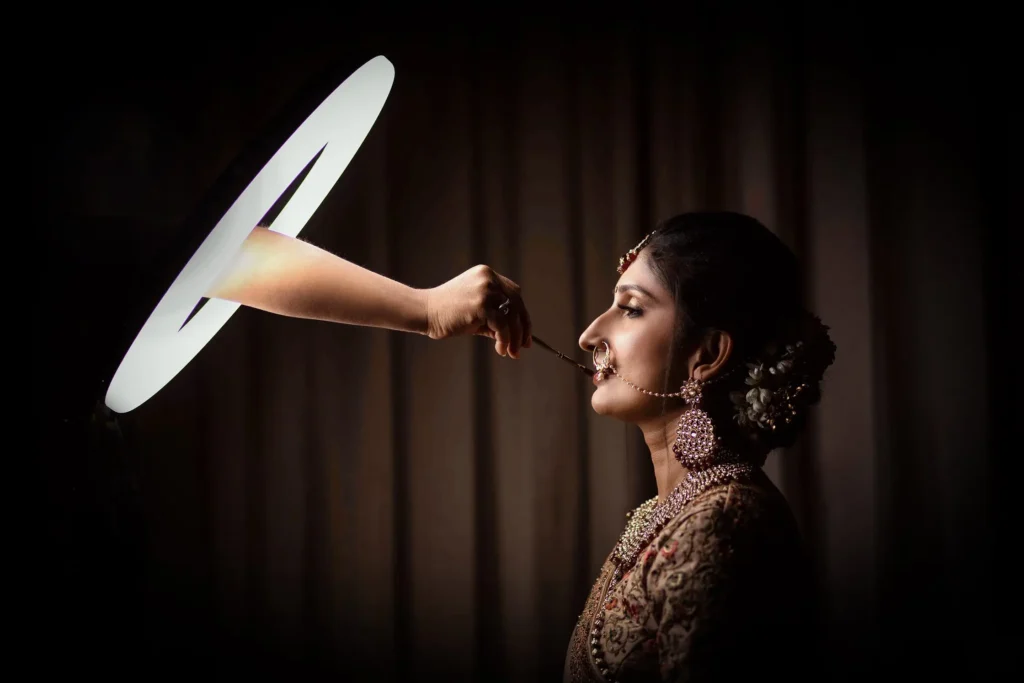
Window light is a classic for a reason: it wraps softly and flatters makeup. A quiet corner near a large window, or an open doorway in the morning, often beats a cluttered ballroom. For evening portraits, a single warm source or a ring light can create dramatic frames, and our post on creative wedding portrait lighting goes deeper on shaping light. Wherever you shoot, a clean, uncluttered background keeps the attention on the bride.
When to Fit Portraits Into the Day
The most natural slot is right after hair, makeup and dressing, before the ceremonies pull everyone in different directions. That window is usually part of the getting ready coverage, and our checklist of bridal getting ready photos shows how portraits sit alongside the candid moments of that hour. A second short window after the pheras, when the pressure has eased, can give softer, more relaxed expressions.
Sharing Your Vision With Your Photographer
A short chat before the wedding helps a lot: the poses you love, the side you prefer, and the details you care about most. Save a few reference frames on your phone and share them in advance. And once the solo portraits are done, the same calm approach works for the two of you together; our ideas for wedding couple portraits pair naturally with these frames.
Bridal portraits are a small investment of time on a busy day, and they tend to become the images everyone returns to. If you are planning your wedding and want to talk through portrait ideas or coverage, feel free to reach out to us. We are happy to answer questions and help you plan something that feels like yours.