
Some pre-wedding frames feel still, and some feel alive. A flowing dupatta is often the difference. Caught by the wind or given a gentle toss, a length of fabric adds movement, scale and a touch of drama to an otherwise quiet pose, and it does so with something the couple already owns. This guide gathers the dupatta ideas that tend to work outdoors, along with the small practical details that make them easier.
None of these need a windy hilltop or a heavy designer dupatta. They mostly need a little patience and a photographer who enjoys timing.
Why a Dupatta Photographs So Well
Fabric in motion gives a photograph something a pose alone cannot: a second subject that moves. A dupatta can lead the eye toward the couple, frame them, or fill empty sky with shape and colour. Sheer fabrics glow when the light sits behind them, while richer silks hold bold lines against a plain background. Because the fabric moves differently every single time, the same idea can produce many distinct frames within a few minutes. Couples who feel unsure in front of the camera often relax faster with fabric involved, because attention shifts from posing to playing with the movement.
The Classic Toss and the Wind
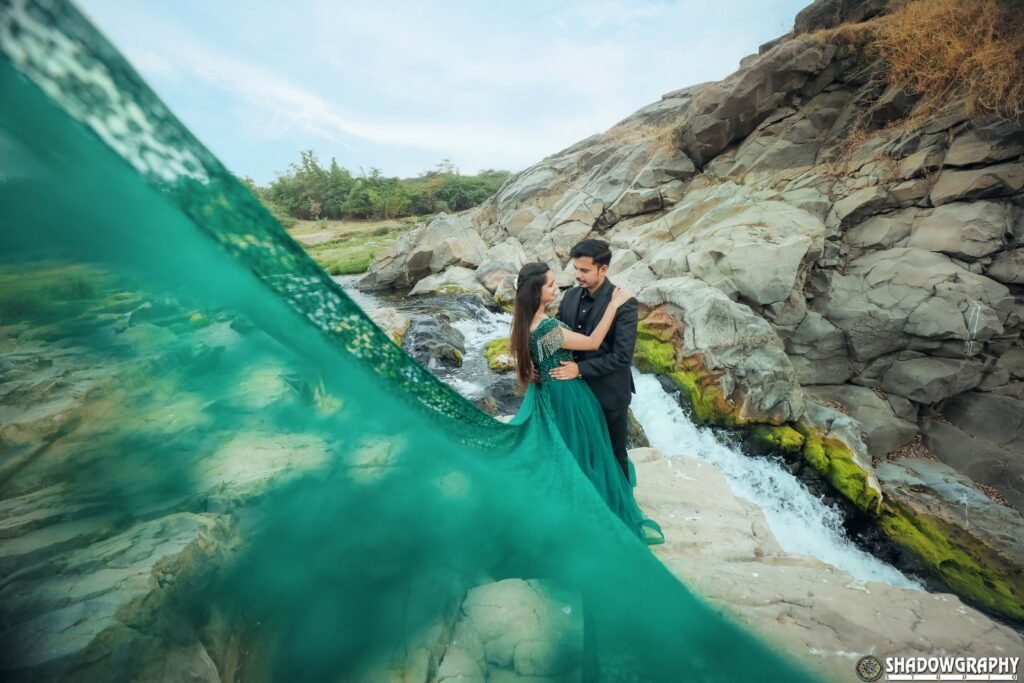
The best-known dupatta frame is the toss: the fabric is lifted and released so it billows behind or above the couple. Wind does this job beautifully on its own, and a helper just outside the frame can lift and release the dupatta when the air is still. The couple simply holds their pose while the photographer times the fabric. A few tries are normal, and the near-misses are part of the fun of the session.
Framing the Couple With Fabric
A dupatta does not have to fly to earn its place. Stretched gently across the foreground, it can frame the couple in soft colour, the way leaves or doorways do. Looped around both partners, it pulls them visually together in a close embrace. Held overhead between two people, it becomes a small canopy that catches backlight. Framing ideas like these also help on days when the location itself is simple, since the fabric adds the visual interest. Our poses guide has couple poses that pair naturally with these fabric ideas.
Solo Frames With Movement
Dupatta ideas are not only for two. A twirl lets the fabric flare outward in a circle, a walk away with the dupatta trailing adds a sense of story, and a quiet portrait with the fabric drifting across one shoulder feels effortless. These frames tend to sit nicely beside the couple shots in a gallery, giving it rhythm without repeating the same composition.
Fabrics and Colours That Move Best
Lightweight fabrics such as chiffon and georgette catch the air easily and float, while heavier silks and velvets fall in clean, sculptural lines. Both can work; they simply behave differently, so it helps to tell the photographer what the dupatta is made of. Colour matters too: a shade that contrasts the location reads clearly in the frame, and our outfit guide covers how to plan colours for a shoot more broadly.
Practical Details for the Day
A few small things keep dupatta frames easy. Safety pins and a spare dupatta are worth packing, since wind and rocks can be unkind to fabric. Windy spots call for secure footing, and our safety guide covers outdoor locations in more detail. Most of all, these frames reward patience: the fabric rarely cooperates on the first try, and the frame that works is often the fifth or sixth. It also helps to keep the rest of the pose simple, so the fabric stays the star of the frame.
Couples who love the idea of fabric in motion are welcome to get in touch with us; we are glad to talk through how dupatta frames could fit into their own shoot.