
The mehndi is the slowest ceremony of the wedding week. The bride sits still for two, three, sometimes four hours while the artist works, and then sits some more while the design dries. Nothing about it is rushed, and that is exactly why it photographs so well when the day is planned with a little care.
This guide helps Indore couples and families plan a mehndi that looks as good in photographs as it feels in the moment. It covers timing, seating, light, drying time, guests and the details worth capturing. It is a planning guide, not a package description, so confirm what your own booking includes with your photographer.
Plan the sitting around light and comfort
Bridal mehndi takes hours, and the bride will spend all of them in one seat. Choose that seat for two things at once: her back will thank her, and the photographs will show it. A chair with proper support, a cushion for her arms and a footstool if the feet are being done matter far more by the third hour than any decoration.
Daylight is the mehndi’s best friend. A spot near a large window, a veranda or a courtyard with open shade gives soft, even light that shows the fine lines of the design. Evening mehndi functions are common too, and they work well, but they need a real lighting plan rather than a single tubelight above the artist. Share the planned hours with your photographer so they can prepare for the actual light, not the assumed light.
Give the design a clean stage
The camera sees everything behind the bride. A clear wall, a plain curtain or a decorated corner made for the occasion keeps attention on the hands and the artist’s work. A busy background – shelves, wires, a half-eaten lunch – will sit inside every close-up of the palms.
Leave working room on both sides. The mehndi artist needs one side; the photographer needs angles from the other. If the seating is pushed into a tight corner to fit more guests, every photograph will fight the furniture.
Treat drying time as photography time
Once the design is on, the bride’s hands are out of service for hours. This is not dead time; it is some of the best candid time of the day. Family members feed her small bites, friends crowd around to compare designs, someone holds her phone up so she can read her messages. These unposed frames often become the couple’s favourites.
Plan anything that needs her hands – outfit trials, jewellery decisions, gift packing – before the artist arrives. Keep a straw, tissues and a small fan within reach, and let one sister or friend be officially in charge of helping her. The lemon-sugar dabbing, the careful walking, the awkward waving with the elbows: photograph it all. It is the honest version of the day.
The details worth capturing
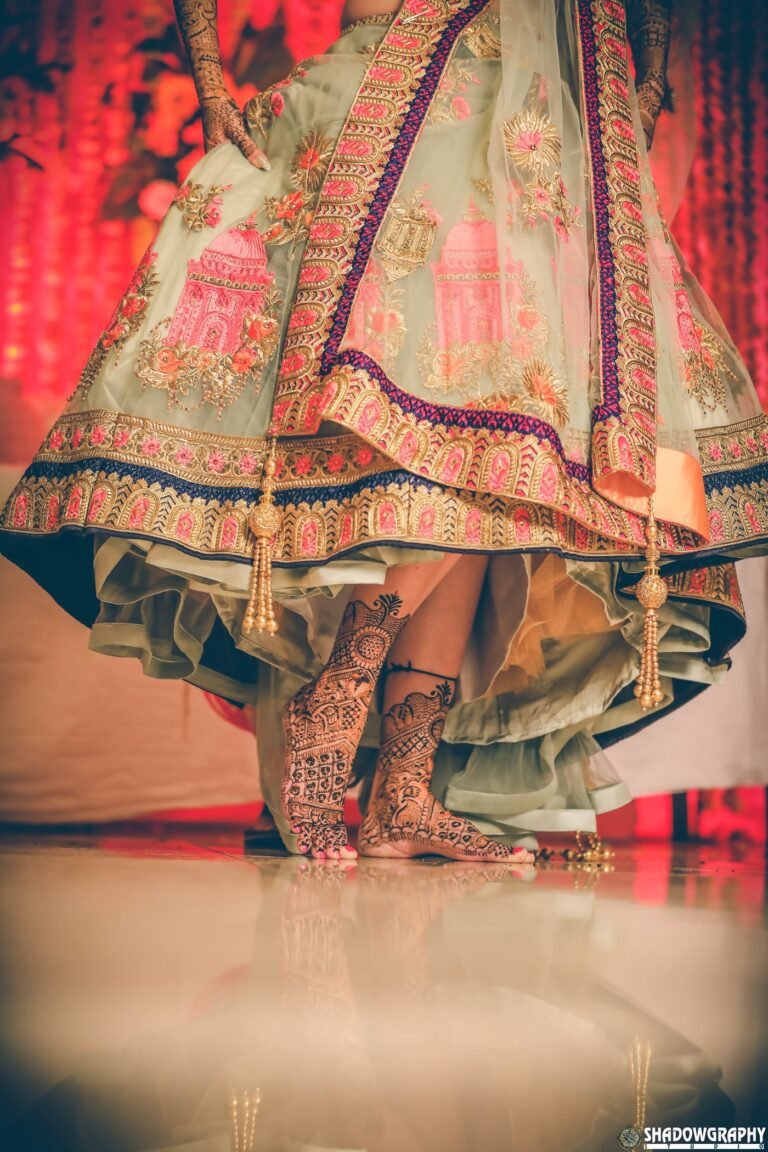
Every mehndi has a few frames that families ask for again and again: the first lines of the design on an empty palm, the artist mid-stroke, the finished palms held up to dry, the mehndi on the feet, the bowl and cones on a decorated plate, and the moment someone spots the groom’s name hidden in the pattern.
Tell your photographer about your family’s own traditions too. Some families apply a small design to the groom’s hand, some have songs or games alongside, some bring the bride’s mother or grandmother into a ritual role. A photographer who knows the sequence will be standing in the right place when it happens. The same planning approach helps for the other ceremonies; our haldi ceremony photography guide covers the messier twin of this day.
Keep guests comfortable around wet mehndi
A mehndi gathering is social, and that is part of its charm. Keep one clear path between the bride and the washroom, the food and the door so nobody brushes against wet hands. Serve food she can manage easily, and keep oily snacks away from the seating area.
Children love mehndi and also love hugging the bride. If many children are expected, a small corner with an artist doing simple designs keeps everyone happy and keeps the bridal design safe. It makes lovely photographs of its own too.
Dress for the design
Outfits for the mehndi work best when sleeves end above the elbow or roll up easily, so the artist never has to work around fabric. Choose something that can survive a stray smudge of henna, and keep the dupatta pinned well back from the hands. Comfortable slip-on footwear helps once the feet are done; laces and buckles are nobody’s friends that day.
Deep greens, pinks and maroons photograph richly against fresh henna, though any colour the bride loves will work. If family members want matching outfits for group photos, plan the group picture before the bride’s hands are wet, or wait until the design is sealed and dry.
Share the plan with your photographer
A short conversation before the mehndi covers everything: the start time and expected length, the venue and seating spot, family traditions, the people who must appear in photos, and whether the function is private or open to a larger crowd. If you are booking coverage for several functions, our coverage hours guide explains how mehndi, haldi, wedding and reception hours are usually planned.
You are also welcome to browse our wedding portfolio to see how mehndi, haldi and wedding-day moments look when they are given room to breathe. Every family’s ceremony is different, and the photographs should feel like yours.
Plan the seat, protect the drying time and tell your people what matters. The mehndi will do the rest. When you are ready to talk about your own wedding dates in Indore, get in touch with the studio – we are happy to walk through the plan with you.