
The sangeet is the loudest, fastest, happiest night of the wedding week, and the hardest to photograph well. The light is low, the dance floor is crowded, and the best moments last about three seconds. Couples who plan the evening with photography in mind come away with frames full of energy. Couples who improvise get dark, blurry memories of a wonderful night.
This guide helps Indore couples and families plan a sangeet that photographs as well as it feels. It covers light, space, entries, outfits, timing and the moments worth capturing. It is a planning guide, not a package description, so confirm what your own booking includes with your photographer.
Plan the light before the playlist
Most sangeet lighting is chosen for atmosphere, not for cameras. A single wash of saturated blue or magenta LED light looks dramatic in the room and strange on skin. Ask the decorator or DJ for warm white light on the stage and the couple’s seats, and keep the coloured effects for the dance floor and the background.
A simple spotlight or a pair of warm LED panels aimed at the stage gives the photographer something to work with during performances and speeches. Share the lighting plan with your photographer before the evening. A ten-minute conversation here changes every photograph of the night.
Give the dance floor room to breathe
The dance floor is where the evening happens, so protect its edges. Keep tables, chairs and the buffet line a few feet away from it, and make sure cables are taped down along walls rather than crossing the floor. A photographer moves constantly during a sangeet, and so do dancing guests. Both need clear ground.
If there is a stage, check its height and the space in front of it. A stage that is too high hides the couple’s feet from the audience; no space in front means no angle for wide photographs of the performances. A few feet of clear floor between the stage and the first row solves both.
Entries, performances and the big moments
The couple’s entry sets the tone for the night. Whether it is a simple walk-in with family or a full production with cold pyros and a chariot, tell your photographer the exact plan and the exact minute. Pyros, confetti and sparkler moments last seconds and cannot be repeated for a missed camera.
Cold pyros need the venue’s permission and a safe distance from guests and fabric. Whoever fires them should know when the couple will actually be in position, so the effect and the photograph happen together. The same applies to family performances: share the running order, and mention any surprise acts, so the photographer is ready instead of reacting.
Dress to move
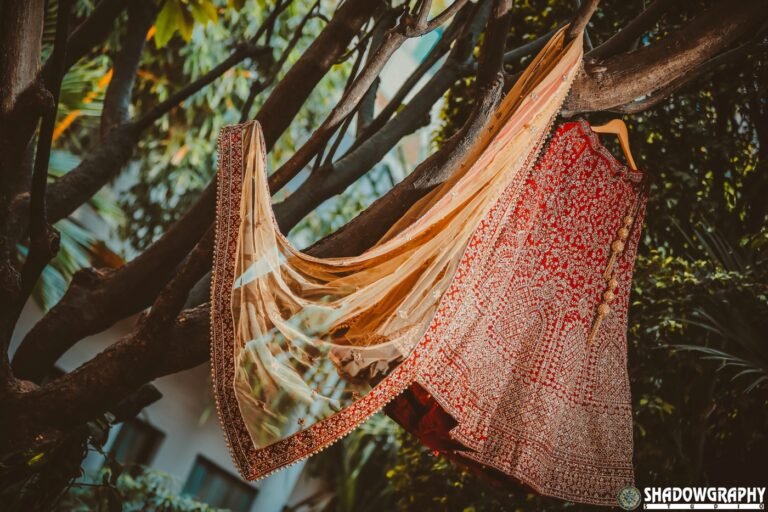
The sangeet outfit has one job beyond looking beautiful: it must survive dancing. Heavy lehengas photograph wonderfully but tire the wearer by the third song. Many brides now choose a lighter lehenga, an embellished gown or a pre-draped saree for the sangeet and save the heaviest outfit for the wedding day. Whatever you choose, try a few dance steps in it during the fitting, not on the night.
Footwear matters more than anyone admits. Comfortable embellished juttis or block heels carry the evening far better than stilettos. Grooms should check that the sherwani or bandhgala allows raised arms, because the dance floor eventually demands them.
Make room for group photos without stopping the party
Every family wants group photographs at the sangeet, and nobody wants to leave the dance floor for them. The fix is to pick one lit corner near the action, not a separate room, and to run groups through it in small batches between performances. Ten minutes of organised batches gives the family every combination without draining the evening’s energy.
Tell one outgoing cousin or friend which groups matter most and let them gather people. The bride and groom should not spend the night hunting for relatives. The couple’s own portrait can happen in five quiet minutes while a performance holds everyone’s attention.
Sound, timing and the neighbours
Many Indore venues follow local sound cutoffs, especially for outdoor music, and residential areas enforce them strictly. Confirm the cutoff with your venue while planning, then schedule the couple’s entry, the family performances and any speeches comfortably before it. The open dancing that follows can continue at whatever volume the venue allows.
Build the evening backwards from the cutoff rather than forwards from the invitation time. Guests rarely arrive at the printed hour, so the schedule should absorb a late start without eating the performances. A sangeet that loses its last two acts to a sound limit feels unfinished; one planned around it feels effortless.
Share the run sheet with your photographer
A short run sheet changes the whole coverage: entry time, performance order, family members who must be photographed, any surprises, and the moments you care about most. If a grandfather is singing or a childhood friend has prepared a medley, name them. The photographer cannot prioritise what they do not know.
Mehndi and haldi have their own planning needs; our guides to mehndi ceremony photography and haldi ceremony photography cover those days. For how the sangeet fits into full wedding coverage, our coverage hours guide explains how the functions are usually planned together.
You are welcome to browse our wedding portfolio to see how Indore sangeet nights look when the light, the floor and the moments are given room to work. When you are ready to plan your own dates, get in touch with the studio – we are glad to talk through the evening with you.