
Black and white wedding photos can make a quiet look, a shared laugh or a close family moment stand out. They work best as an intentional part of a wedding story, not as a filter applied to every picture. Before you choose an editing preference, think about what you want the photograph to preserve.
This guide helps Indore couples discuss monochrome images with their photographer, choose where colour matters, and build a balanced selection for their gallery and album. There is no fixed percentage that every wedding needs. The useful decision is which version tells each moment most clearly.
Decide what you want the image to say
Start with the subject rather than the editing effect. Is the photograph about an expression, a relationship, the shape of a doorway or the colour of an outfit? A close embrace may feel complete without colour. A carefully chosen combination of flowers, fabric and jewellery may lose part of its meaning when the colours disappear.
Tell your photographer why you like a reference image. You might be responding to the expression, soft light or simple background rather than monochrome itself. Separating those preferences gives the team a clearer brief than asking for everything to look like a favourite picture.
Use black and white wedding photos for moments, not a quota
Consider a small set of emotionally important photographs first: a parent adjusting a dupatta, two people laughing between portraits, hands held during a quiet pause, or a guest watching a familiar ritual. Ask whether removing colour helps you notice the people before the surrounding decoration.
Do not turn that suggestion into a mandatory shot list. A moment should not be repeated simply because it might make a monochrome image. Let the photographer cover what happens, then discuss which frames would benefit from that treatment during selection.
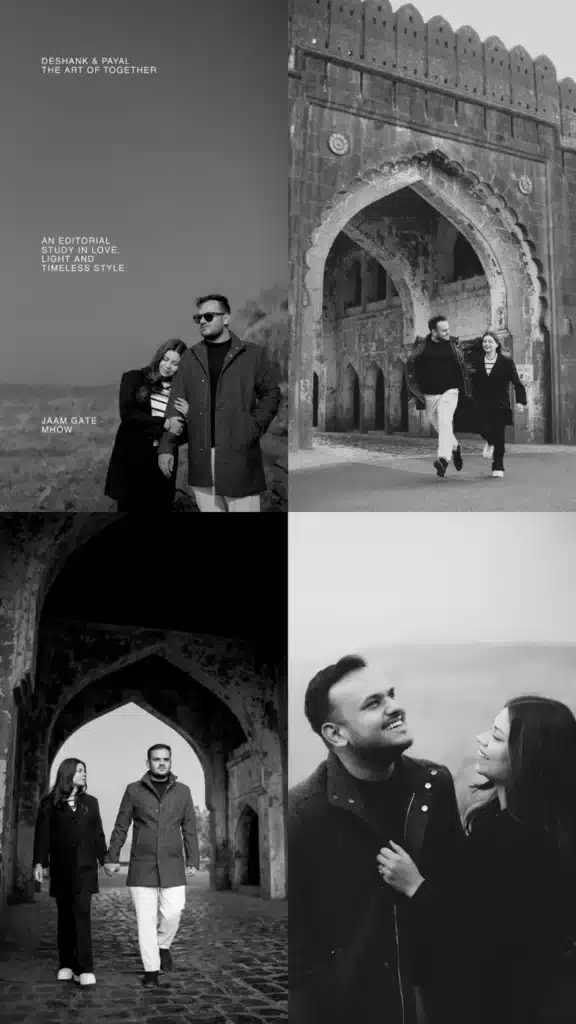
Keep colour when colour carries the memory
Think about the details you would want to describe years later. The colour of a family sari, the mehendi design against an outfit, a floral arrangement or a meaningful piece of jewellery may deserve a colour version. For a haldi celebration, ask whether the colour itself is part of what makes the photograph recognisable to you.
You can like a monochrome portrait without giving up colour throughout the wedding. Mark a few details where colour is important in your wedding photography brief. Avoid assuming that every delivered frame automatically comes in both versions; confirm the actual editing and delivery arrangement.
Look at faces, light and separation
When reviewing a black and white photograph, look beyond whether it feels dramatic. Can you read both people’s expressions? Does a dark outfit blend into the background? Are important details in a face or embroidered fabric still visible? Does the background pull attention away from the subject?
Ask to see complete examples rather than judging the style from a tiny phone preview. Dark, soft and high-contrast treatments can feel different across a full set. Choose a direction that suits the photographs and the people in them, rather than asking the editor to force every lighting situation into one reference.
Do not treat monochrome as a repair promise
If an image is blurred, an expression is missed or a face is hidden, changing its colour treatment does not create the missing moment. A photograph may still matter emotionally, but that is a different decision from expecting editing to make it technically perfect.
When comparing versions, ask what you like about each. If the colour image feels busy, a different selection or crop may be worth discussing. If the monochrome version hides details you care about, keep the colour image. Make the choice from the actual photograph, not from a rule that black and white always looks more artistic.
Share a short, useful editing preference
A few annotated references are easier to interpret than a large folder of unrelated screenshots. For each example, note the part you like: gentle tones, clear expressions, a simple background, architectural lines or a close crop. Include a colour reference too if you want a mixed gallery.
You could write: “We like a small selection of natural black and white moments, especially close family interactions. Please keep the outfits and ceremony details in colour where those colours are important. We would like to understand how alternate edits are handled before choosing.” Adapt this to your own priorities instead of treating it as a required package feature.
Build an album sequence with breathing room
Review neighbouring photographs together. A monochrome image may provide a quiet pause between busy scenes, but switching treatments repeatedly can feel distracting if the changes have no reason. Try grouping related moments and checking whether the sequence still reads clearly.
Ask to see the proposed album layout before approving it. Check faces, image size, the fold and whether a crop removes someone important. If a colour and monochrome version of the same frame sit next to each other, decide whether both add something or simply use space that another meaningful photograph could occupy.
Agree on versions and revisions before selection
Confirm who chooses the monochrome images, whether you can request a different treatment for a favourite, and what the booking includes. Ask how selection feedback should be sent and whether additional versions or revisions carry a charge. These are questions to settle with your photographer, not benefits to assume.
Keep one clear list of requested changes with the correct image references. The wedding photo delivery checklist can help you organise the handover conversation. Keep private family requests within the agreed audience, especially if photographs will also be considered for public sharing.
Questions about black and white wedding photos
Should we ask for the entire gallery in black and white?
Only if that genuinely matches your priorities and the photographer agrees to that scope. Review a full example first and consider which outfits, rituals and details you would miss seeing in colour.
Can we request both versions of a favourite photograph?
Ask before final selection. Alternate edits, revision rounds and delivery formats depend on the agreed booking. A preference is worth discussing, but it does not establish that every version is included.
Are black and white photographs only for emotional moments?
No. You may also enjoy the way a photograph shows shapes, light or a setting. Choose the treatment because it supports that particular image, not because a whole category must always be monochrome.
Share your colour and monochrome references with Shadowgraphy Studio while planning your photography. A small, thoughtful set of preferences is more useful than a rigid editing rule. If any images may be used beyond your private gallery, discuss that separately using the wedding photo privacy guide.