
Wedding photography coverage hours should follow the moments you want to remember, not a number chosen before you have planned the day. A short ceremony with portraits in one venue needs a different approach from preparation in two places, a long procession and a late reception. The useful question is not simply “how many hours do couples book?” It is “what must fit inside our coverage?”
This guide helps Indore couples prepare that conversation. It does not set Shadowgraphy Studio’s package hours or prices. Confirm the actual start, finish, breaks, travel and extension terms in your written agreement.
List the moments that need coverage first
Write down your essential events before comparing packages. Include preparation, family photographs, the entrance or procession, ceremonies, couple portraits and the parts of the reception that matter to you. Mark optional moments separately so you can make a sensible choice if the day is crowded.
Be specific about preparation. Do you want the final outfit adjustments and a portrait, or a longer record of family and friends gathering? Likewise, reception coverage could mean the entrance and key family groups, or it could include speeches, dinner interactions and dancing. The same event label can hide very different expectations.
- Must be covered: the events and people you would regret missing.
- Would be nice: moments you can include if the schedule permits.
- Not needed: breaks or events you do not want photographed.
Share this list in your wedding photography brief. It gives the photographer a clearer starting point than asking for “full-day coverage” without explaining the day.
Use the real schedule, including travel
Put the events in order and add their locations. Include the time needed to leave a hotel, reach the venue, park, move equipment and find the right room. Do not assume the team can finish photographing one event and appear instantly at another.
If the couple gets ready in separate locations, flag that early. One photographer cannot be in both rooms at once. The solution may be a different sequence, a second photographer or choosing which preparation moments matter most. More coverage hours alone do not solve simultaneous events.
Build from your wedding photography timeline, then ask the team to identify the tight points. Venue access, outfit changes and movement between rooms all belong in the plan.
Choose the start time around a useful moment
The earliest possible start is not always the most useful start. If everyone is still waiting for outfits or a room is not ready, a long empty window may add little. On the other hand, arriving at the ceremony start can leave no room for venue details, family greetings or preparation portraits.
Ask what the team needs to do before the first essential event. Decide whether preparation coverage starts with makeup, final adjustments or the family gathering. Give the photographer a realistic readiness time rather than the optimistic time printed on an invitation.
Protect portraits inside the coverage window
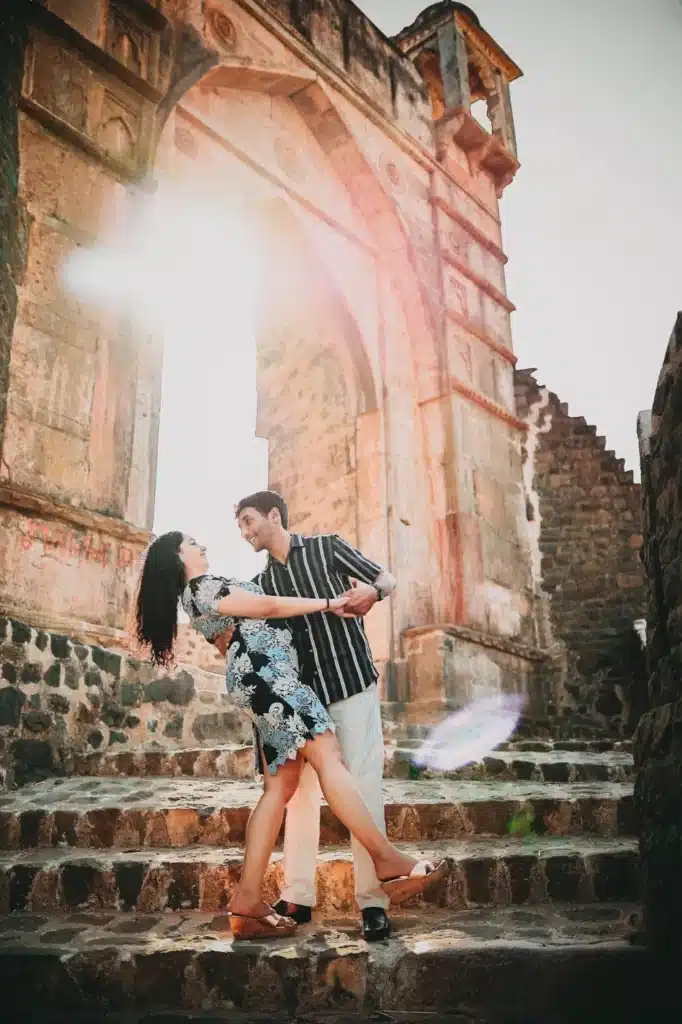
Couple portraits are easy to push aside when rituals or greeting queues run late. If portraits matter, reserve a small window within the booked coverage instead of hoping the team can squeeze them in after its finish time.
Choose a nearby setting and avoid unnecessary travel during a busy wedding day. Tell your coordinator when you plan to step away. A calm short session can be more comfortable than a long one when you are tired, hungry or being called back to guests.
Work backwards from the last essential event
Pick the final moment you definitely want photographed. It might be a ceremony’s completion, a reception speech, a dance or a family farewell. Ask whether its expected timing fits the coverage you are considering.
Do not rely on “the team will stay until everything is done” unless that is actually agreed. If a late event is important, discuss a later start, longer coverage or separate event coverage. Confirm how a delayed programme is handled and who can approve a change.
Ask what the hours mean in the agreement
Package language can leave gaps. Before booking, ask the photographer to explain the actual arrangement in plain words.
- Are the hours continuous, or can coverage be split?
- Does travel between venues fall within that window?
- How are long breaks between events handled?
- Are photography and video coverage times the same?
- What happens if an event starts late or runs beyond the finish?
- Who can approve an extension, and what will it cost?
These are questions to verify, not rules that apply to every studio. Ask for the agreed answers in writing. An extension may depend on team availability as well as price, so do not treat it as a guaranteed backup.
Separate team size from coverage length
A larger team can cover different places or activities at the same time. A longer booking can cover more of the day. They solve different problems. Two simultaneous ceremonies or preparation rooms may need another person; a late reception may need more time.
Use your programme to discuss photography team size. Avoid adding people simply because another wedding had a large team, or cutting hours simply because more photographers are attending. Match both decisions to your own priorities.
Leave room for ordinary delays
Outfits need adjustments, relatives arrive late and ceremonies do not always follow the printed programme. A practical plan leaves breathing room around essential moments. Ask where flexibility is most useful instead of adding the same buffer everywhere.
Nominate one person who knows the programme and can tell the team when something changes. That person should know your priorities and the agreed coverage limits. You should not have to negotiate every delay while getting married.
A coverage-hours planning checklist
- List essential and optional moments.
- Add real locations, travel and preparation readiness.
- Flag simultaneous events and separate preparation rooms.
- Choose a useful start time and final essential moment.
- Protect a portrait window and some flexibility.
- Confirm continuous or split coverage and extension terms.
- Share the final plan with your coordinator and photo/video teams.
Wedding photography coverage hours FAQs
Is full-day coverage always the best choice?
No single label fits every wedding. A compact celebration may need less time than a multi-venue programme. Ask what “full day” means in the proposed agreement, then compare it with your actual events.
Can we add hours on the wedding day?
Ask before booking. An extension may be possible, but it depends on the team’s agreement and availability. Confirm the cost, approval contact and process in advance rather than assuming extra time is included.
What should we send when asking for a quote?
Send your dates, venues, event sequence, approximate timings and essential moments. Tell Shadowgraphy Studio if preparation happens in separate places or a late event must be covered. That information supports a useful coverage discussion without choosing a package by hours alone.