
Good pre-wedding shoot outfits let you move, feel comfortable and look like a couple without dressing as identical copies of each other. The most useful question is not “Which dress is trending?” It is “Does this look suit us, the location and the photographs we want?”
For an Indore pre-wedding session, choose the setting and overall mood first. Then build a small wardrobe plan that works with the light, the walking involved and the time available for changes. This guide covers colour, fit, formal and casual combinations, practical footwear and the small checks that prevent an outfit from taking over your shoot.
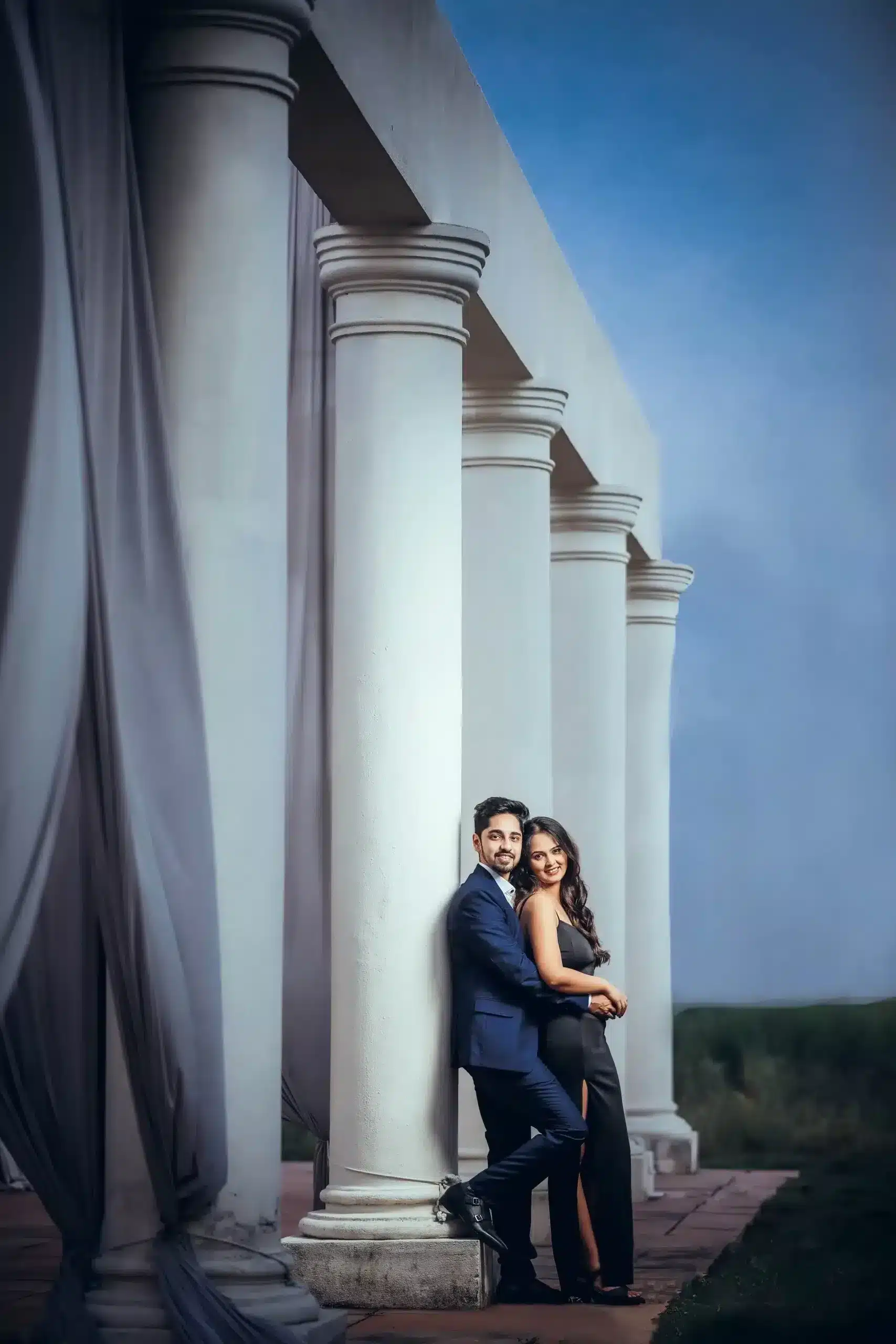
1. Coordinate your outfits instead of matching everything
Place both outfits beside each other in daylight. Look at colour, formality, fabric and how much visual attention each one needs. If one partner wears a heavily detailed outfit and the other a very casual shirt, the difference may be intentional, but discuss it rather than discovering it on the day.
A shared colour family is often enough. One outfit can carry the main colour while the other picks it up in a smaller detail. You can also use contrasting colours if the combination suits your background. There is no rule that both partners must wear white, beige or the same shade.
Avoid choosing a palette only because someone else’s shoot looked good in it. Skin tone, fabric sheen, flowers, walls and foliage can change the effect. Send photographs of the actual outfits to your photographer before making a final choice.
2. Decide what the outfit should say about you
Start with three words, such as relaxed, festive and romantic, or simple, formal and architectural. They are a more useful brief than a folder containing ten unrelated looks.
If you normally feel comfortable in Indian clothing, do not assume a gown and suit are compulsory. If you prefer a casual session, there is no need to add a grand formal look just to make the shoot feel “premium”. You can make a varied gallery through light, framing and movement rather than changing your personality with every outfit.
Agree the direction together. A pre-wedding session belongs to both partners, and each person should be comfortable with how formal, fitted or revealing their own clothes feel.
3. Use these outfit combinations as starting points
| Mood | Possible pairing | What to check |
|---|---|---|
| Relaxed | A comfortable dress or separates with a shirt and well-fitting trousers | Both looks have a similar level of formality |
| Indian festive | Saree, suit or lehenga paired with a kurta or another coordinated Indian look | Draping, footwear and freedom to walk or sit |
| Formal | A gown or structured outfit paired with a suit or tailored separates | Fit, fabric creases and the changing arrangements |
| Minimal | Simple silhouettes with limited jewellery and clean lines | The outfits do not blend into the chosen background |
| Personal | Clothes connected to a shared hobby, meaningful place or familiar outing | The idea feels genuine rather than a costume |
These are options, not a dress code. Use the idea that fits your relationship and the session plan. Ask your photographer whether a particular outfit needs a quieter background, more space or a different type of light.
4. Test the fit with real movement
Do more than stand in front of a mirror. Walk, sit down, lift your arms and turn towards your partner. Check whether a neckline shifts, a shirt pulls, a waistband becomes uncomfortable or a dupatta needs constant attention.
If you plan to rent clothes, allow time for a fitting and check the return conditions. Do not assume a photographed rental outfit will fit or include every accessory shown. Ask the provider about alterations, cleaning, damage charges and the dates you can collect and return it.
Consider what happens between setups. A long train may look good in a still portrait but need help when moving. Bring a practical cover or carrying arrangement if needed. Do not drag fabric through a location that could damage it or create a safety risk.
5. Use texture carefully and check strong prints
Fabric texture can add interest without requiring a busy pattern. Linen, embroidery, soft draping or a structured jacket can work differently in light. Let one strong detail lead rather than competing with heavy prints, large logos and multiple statement accessories.
Very fine repeating patterns can sometimes look distracting on camera. If you are unsure, send a close photograph and a full-length photograph of the outfit to the team. A camera test is more useful than assuming a print is always good or always bad.
Bright colour is not forbidden. A strong colour can be the centre of an image if the rest of the scene supports it. The issue is balance: two loud prints against a busy background give the eye several competing subjects.
6. Choose footwear for both photographs and travel
Shoes may appear in full-length photographs, so include them in the outfit test. Check colour and style, but also whether you can comfortably stand and walk on the planned surface.
Bring practical footwear for moving between setups if your photographed shoes are not suitable. Avoid brand-new shoes that rub. A location with steps, grass, gravel or uneven paving needs a realistic plan, not a promise that you will tolerate discomfort for the photographs.
Tell the photographer about mobility needs before choosing a route or pose. No outfit requires a risky climb, a road photograph without proper safety arrangements or standing at an unstable edge.
7. Keep outfit changes realistic
Count the whole change, not only the time needed to put clothes on. You may need to walk to a private space, adjust hair and jewellery, repack items and return to the setup. Several changes can consume the best part of a short session.
Agree the number of looks with your photographer based on the booked coverage, travel and changing facilities. One comfortable look and one different mood can be a useful starting point, but there is no fixed number every couple must bring.
Set the order before the shoot. Consider which look needs more preparation, which photographs depend on particular light and which clothes are easiest for the route. Avoid leaving the most complicated change until everyone is tired and the light is disappearing.
8. Prepare small details without overpacking
Pack each look together: outfit, shoes, jewellery and any required underlayers. Use separate bags or covers so you are not searching for an earring or cufflink at the location. Bring the accessories you have tested rather than a large selection of new possibilities.
Useful essentials may include water, tissues, a small grooming kit, safety pins and any personal comfort items you need. Ask your stylist what is suitable for the fabrics and hair arrangement. Do not assume the photography team carries a complete wardrobe repair kit.
Remove items from pockets before portraits if they distort the clothes. Check tags, visible packaging and sunglasses when moving into a new setup. These are quick adjustments that save interruption later.
9. Confirm location rules before dressing for a reference
A venue may restrict changing, props, professional photography or access to certain areas. Confirm the relevant permissions and fees with the operator before finalising the session. A dramatic outfit does not establish permission to occupy a public walkway or use a private space.
Plan for the actual weather and surface conditions. Keep an indoor or simpler alternative that works with your clothes. Do not copy seasonal advice from another city without checking whether it suits your date in Indore.
The final outfit checklist
- Photograph both outfits together and share them with the photographer.
- Check fit while walking, sitting and moving your arms.
- Try shoes before the shoot and pack practical walking footwear.
- Confirm the number, order and location of outfit changes.
- Pack each complete look separately, including accessories.
- Check any rental fees, damage terms and return deadlines.
- Confirm venue access and changing rules with the operator.
- Keep a weather alternative and enough arrival time.
- Choose comfort and personal style over a reference that feels unlike you.
Frequently asked questions
Do we need matching colours for a pre-wedding shoot?
No. Coordinate colour, formality and detail. Complementary outfits can look connected without being identical.
Should we wear Indian or Western outfits?
Choose what feels right for your preferences and the setting. You can use either, or plan two different looks if the session has time and suitable changing facilities.
How many outfits should we take?
Agree that with the photographer before the day. Coverage length, travel, preparation and changing facilities matter more than a standard number.
Are bright colours bad for photographs?
Not automatically. Consider the background, fabric and the other partner’s outfit. A strong colour can work well when it is part of a deliberate plan.
Make the clothes part of the story
Explore Shadowgraphy Studio’s pre-wedding photography portfolio, then discuss the mood and setting before deciding your wardrobe. For direction during the session, read our guide to natural pre-wedding photos for camera-shy couples. If you are comparing teams, use our photographer booking checklist.
Further reading: Adela Photography’s pre-wedding wardrobe guide and Paul Aston Photography on outfit preparation. Outfit ideas are general planning suggestions, not studio package inclusions or confirmed venue arrangements.