
Natural pre-wedding photos do not require you to become a different person. If you feel awkward when a camera appears, the answer is usually a simpler session: fewer competing ideas, comfortable clothes, clear direction and something real to do together.
For couples planning a pre-wedding shoot in Indore, this guide explains how to prepare, choose references and use gentle movement without forcing laughter or copying a stranger’s personality. You can still have a few polished portraits. The aim is a gallery that feels like the two of you, not a performance you have to maintain for hours.
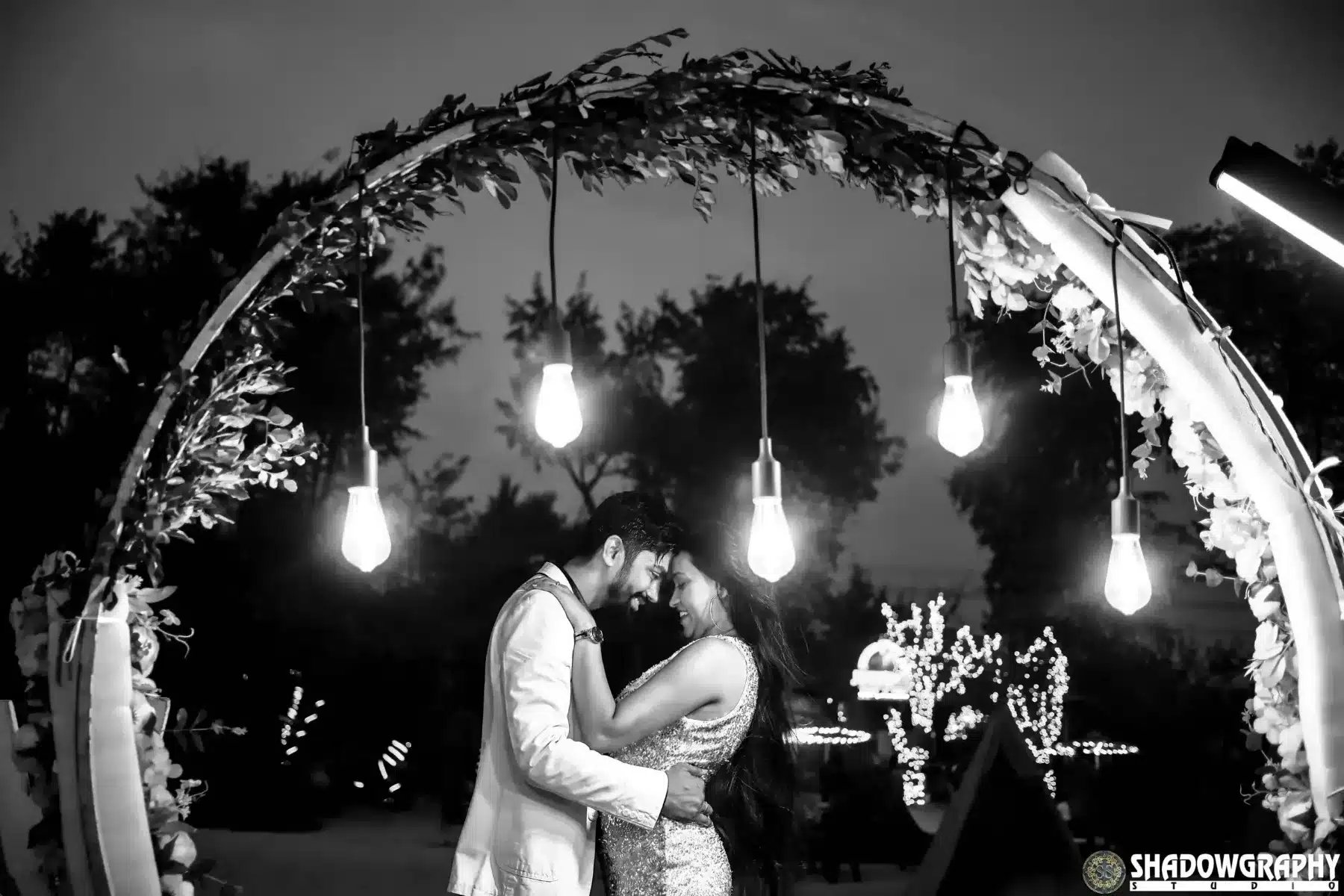
1. Tell your photographer what makes you uncomfortable
“We are not good at posing” is useful, but a little detail helps more. Tell the photographer whether you dislike looking into the lens, public attention, elaborate expressions or close-up portraits. Share any boundaries around touch and photographs you do not want published.
Then explain what feels normal: walking together, talking over coffee, holding hands or sitting quietly. A good brief contains those everyday details. You are giving the team a way to direct you, not asking them to leave you without guidance.
Ask how the session begins. Starting with a simple walk or a conversation can feel easier than standing in the middle of a busy space and being asked to produce a romantic expression immediately.
2. Choose references for mood, not for exact imitation
Select a small set of photographs and explain what you like about each: the distance between the couple, the softer colours, the architectural background or the quiet expression. Separate those preferences from a specific dress, body shape or location that has little to do with your own shoot.
Include one photograph you do not like and explain why. “Too much posing” can mean a dramatic dip, a stiff hand position or exaggerated laughter. Knowing the difference makes the brief clearer.
Do not expect a reference made with controlled lighting, an empty location and a large production team to happen spontaneously in a crowded public space. Discuss which parts of the idea are realistic for your session.
3. Pick a location where you can actually relax
A familiar or meaningful setting can give you something to talk about and make the first photographs easier. It might be an accessible outdoor space or a venue you already enjoy. The right backdrop is one that fits your story, lighting and practical needs, not only a place that looks impressive online.
Before confirming a location, check access, photography permission, changing facilities, walking distance and any booking fee with its operator. Do not assume every public-looking place permits a professional shoot. If you prefer privacy, ask about quieter arrangements instead of promising yourself there will be no crowd.
Have a weather alternative that you are willing to use. Comfort is difficult when you are worried about rain, heat or getting an outfit dirty. A simple indoor plan can be better than an unsafe attempt to recreate an outdoor reference.
4. Dress so movement still feels natural
Try outfits together before the day. Walk, sit and raise your arms in them. Check whether you can breathe comfortably, whether jewellery catches on fabric and whether shoes suit the route. Bring practical footwear for moving between setups even if the photographed look uses different shoes.
Coordinate rather than match every colour. Consider the background and avoid relying on an outfit that needs constant correction. Choose clothes you feel good wearing, not only clothes that photograph well on someone else.
Keep changes manageable. Each change uses session time and can interrupt the rhythm you have just found. Agree the number and order with the photographer, including where you will change. A long gown, fitted suit or traditional outfit can all work if the movement and setting suit them.
5. Let the photographer choose light that suits the setting
Soft light can help avoid harsh shadows and squinting, but there is no universal clock time that works at every location. Buildings, trees, weather and the direction of the background affect the available light. Ask your photographer to plan for the actual date and place.
Do not copy a sunset schedule from another city. Leave enough time to arrive, change and settle before the intended portrait window. If the light changes, use a nearby shaded or indoor option rather than rushing through uncomfortable instructions.
6. Use easy prompts instead of holding a pose forever
A prompt gives you a small action. The photographer still looks after composition, light and timing. These ideas are options to discuss, not instructions to perform if they feel unlike you.
| Prompt | Why it can help | Keep it comfortable |
|---|---|---|
| Walk together and talk about the journey to the shoot | Gives your hands and attention a natural purpose | Use a clear, safe route and a pace you both enjoy |
| Stand close and look at one another | Creates a quiet portrait without a big gesture | No pressure to smile or touch in a particular way |
| Sit together and share a familiar story | Can soften the feeling of being watched | Check the seat, outfit and posture first |
| Turn towards your partner as they approach | Creates a small change rather than a fixed pose | A short movement is enough; do not rush |
| Hold hands and pause after a few steps | Combines movement with a clean still portrait | Let the photographer give simple adjustments |
You do not need a new prompt for every frame. Give a comfortable action time to develop. Some couples naturally laugh; others make quieter photographs. Both are valid. A gallery full of loud reactions is not automatically more candid than a gentle one.
7. Keep a few directed portraits in the plan
Natural does not mean no direction. A small adjustment to shoulders, hands or where you stand can make a photograph clearer without changing your relationship. Ask for plain instructions, one at a time, if detailed posing language makes you tense.
A mix of wider scenes, close portraits, movement and stillness gives you variety. Save a few clean photographs where both faces are easy to see, particularly if you want to use them on an invitation or wedding website. Tell the photographer about those uses before shooting so there is room in the composition for text if needed.
8. Avoid the habits that make a session feel forced
- Checking every frame immediately: constant review can interrupt the session. Agree when you will pause to check direction.
- Copying every reference: use the mood as a guide and leave room for your own expressions.
- Adding too many locations: travel and changing time can take over the session.
- Forcing laughter: a calm expression is better than pretending to find something funny.
- Choosing risky actions: no photograph needs an unsafe road, cliff edge, moving vehicle or uncomfortable lift.
- Ignoring one partner’s preferences: decide the style together, especially around public affection and publishing.
If you feel tired or uncomfortable, say so. A short break, water or a simpler setup can be more useful than trying harder to look relaxed. The photographer cannot fix a boundary they do not know about.
A small preparation checklist
- Share a short reference set, including what you like and dislike.
- Confirm location access and professional-photography permission.
- Agree the arrival time, session coverage and outfit order.
- Try clothes and shoes before the day; bring essentials for changes.
- Tell the team about privacy needs, mobility needs and uncomfortable actions.
- Keep a weather backup and a realistic travel plan.
- Bring water and any personal items you need to stay comfortable.
- Discuss intended photo uses, editing preferences and delivery terms separately.
More ways to look natural
How do you look natural in your pre wedding photos when you are not used to being photographed? It is one of the most common worries couples carry into a shoot, and the good news is that natural looking photos rarely come from posing harder. They usually come from planning, comfort and a few simple habits.
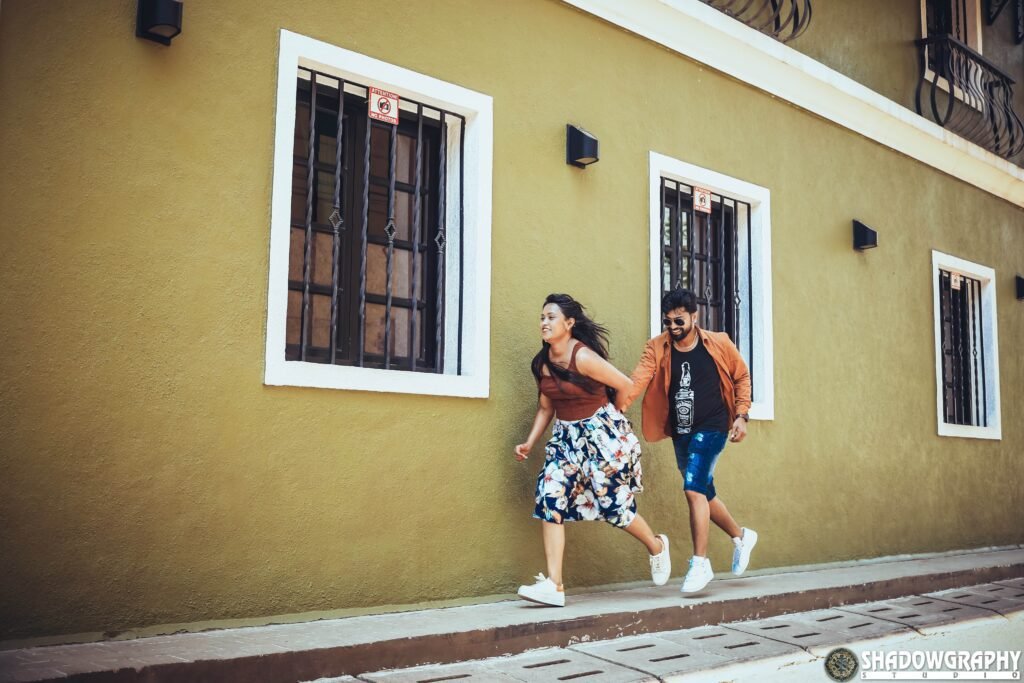
A short conversation before the shoot can remove most of the guesswork. Share what makes you self conscious, ask how the photographer likes to direct couples, and agree on how much guidance you want on the day. Some couples like clear direction for every frame, while others relax more with loose prompts. Knowing which style you are getting helps you walk in with realistic expectations, and the what to expect guide covers the wider shape of the day. It may also help to look at a few frames together from earlier shoots so you can point to what you like.
Clothes that pinch, slip or need constant adjusting keep your mind on the outfit instead of the moment. Outfits you can walk, sit and laugh in tend to photograph better because you stop managing them. Try everything on together before the day, including shoes, and move around in it for a few minutes: sit, walk and lift your arms to see what rides up or pulls. The outfits guide has practical shortlisting ideas.
Shoot ideas for camera-shy couples
“We are awkward in front of the camera.” It is one of the most common worries photographers hear before a pre-wedding shoot, and also one of the easiest to work around. A good session is built so that you never have to perform.

Being photographed by a professional is unfamiliar for most people. A lens pointed at you for hours can make anyone self-conscious, and the pressure to look perfect only makes expressions stiffer. Photographers who shoot couples regularly expect this. The first fifteen minutes of a session are often treated as a warm-up, with the understanding that the real photographs come once the couple forgets the camera is there.
Camera-shy couples usually photograph best when they are doing something rather than holding something. Walking along a trail, sharing a joke, spinning once to catch the dupatta in the wind, or simply talking while the photographer shoots from a distance: these prompts give your hands and faces something natural to do. Laughter that starts as a prompt tends to turn real within seconds, and those are the frames couples keep.
Staying natural on the wedding day too
Almost every couple says the same thing at the first meeting: we are awkward in front of the camera. Then the wedding album arrives, and the same couples look relaxed, joyful and completely themselves. The difference is not genetics or modelling experience. Natural photographs are made – through comfort, timing and a photographer who knows how to disappear.
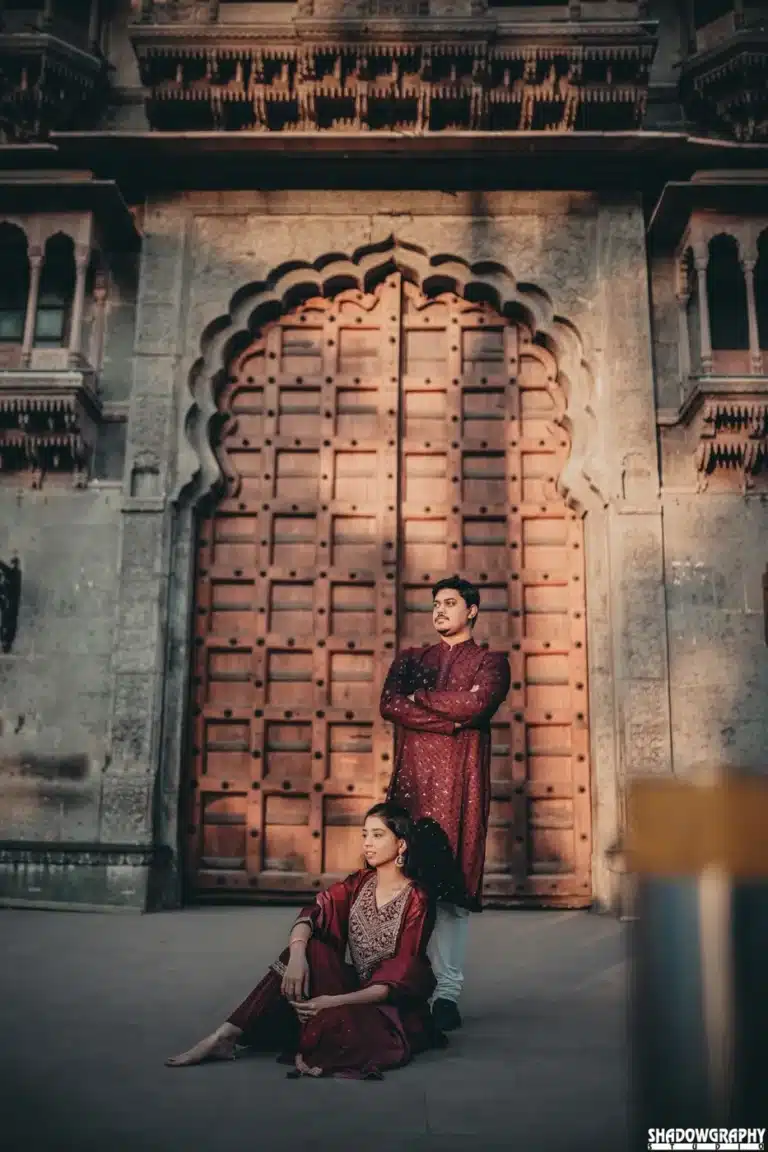
The single best cure for camera-shyness is familiarity. When your photographer is a stranger with a lens, you perform. When they are someone you have laughed with, you forget they are there. Meet your photographer before the wedding, talk through the day, and let them learn how you two are together.
The most beautiful ceremony photographs happen when nobody is performing. The haldi laughter, the tear during the pheras, the grandmother’s blessing – these are real because the people in them are busy feeling, not posing. Your only job during the rituals is to be present in them.
Frequently asked questions
Can camera-shy couples get natural pre-wedding photos?
Yes. Tell the photographer how you feel and begin with simple actions. You do not need to perform a confident personality. Clear direction and a comfortable setting can make the session easier.
Do we have to kiss or use dramatic poses?
No. Agree your boundaries before the session. Walking, sitting together, looking at one another and quiet portraits can show connection without actions you dislike.
How many outfits should we bring?
Agree this with your photographer based on the session length, locations and changing facilities. Fewer well-chosen outfits often leave more time for photographs than a long list of changes.
Should we choose a famous location or a meaningful one?
Compare both for access, light, privacy and comfort. A meaningful location can be a good choice, but it still needs workable conditions and permission where required.
Plan a shoot that feels like you
Explore Shadowgraphy Studio’s pre-wedding photography portfolio and share your preferred mood when discussing a session. If you are also booking wedding coverage, read our photographer booking questions and Indian wedding photography timeline.
Planning your shoot in Indore? Send us your date and venue on WhatsApp or call +91 97700 81043, and we will tell you if the date is free.